
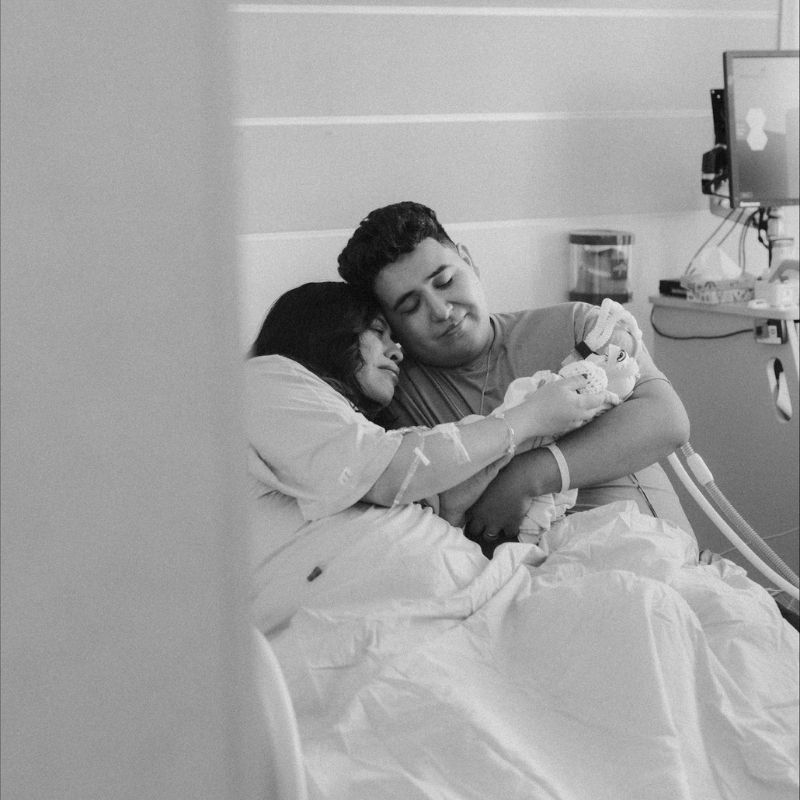
Published on Oct. 23, 2026
For years, Jessica believed motherhood might not be possible.
Diagnosed with polycystic ovary syndrome, or PCOS, and other reproductive health complications at age 20, she knew becoming pregnant could be difficult. She and her husband, Art, tried to start a family for several years without success.
Jessica first came to MemorialCare after discovering Kais Rona, M.D., a bariatric surgeon, on TikTok and sought his care for gastric sleeve surgery for weight loss at MemorialCare Orange Coast Medical Center. After a positive experience there, she chose to continue her primary care with MemorialCare.
When she and Art were ready to start a family, that ongoing care led to a referral to Rachael Lopez, M.D., medical director of OB-GYN at the Women’s Health Pavilion at MemorialCare Saddleback Medical Center, who guided them through their fertility journey.
Jessica became pregnant in 2023, but the pregnancy ended in miscarriage. When the couple tried again in 2026, they initially believed she was not pregnant. After taking a couple of at-home pregnancy tests, Jessica scheduled an appointment with Dr. Lopez to confirm the pregnancy, where the hopeful couple found out she was pregnant.
“It felt like such a blessing because I was told I would never be a mom,” Jessica recalls.
At one of their prenatal appointments in May, the couple received another surprise: Jessica was carrying identical twin boys.
Although MemorialCare Saddleback Medical Center offers high-risk pregnancy care and was closer to their home in Arizona, Dr. Lopez recommended that Jessica and Art continue their care at Miller Children’s & Women’s Hospital in Long Beach, the region's only children’s and women’s hospital. This allowed them to access a higher level of specialized care while remaining with the MemorialCare system.
Jessica’s complex twin pregnancy required a higher level of maternal and neonatal care, including a Level IV maternity center and Level IV Neonatal Intensive Care Unit (NICU)—the highest designation in the nation. Because both hospitals are part of MemorialCare, her care team could connect her with the specialized care she needed while ensuring her medical history and care plan followed her without disruption.
When an Ultrasound Changed Their Pregnancy
Jessica and Art continued traveling to California for prenatal appointments. Because Jessica was carrying identical twins and had underlying health concerns, her pregnancy required close monitoring.
At approximately 17 weeks, an ultrasound revealed a serious complication known as twin-to-twin transfusion syndrome, or TTTS.
TTTS can develop during identical twin pregnancies when babies sharing a placenta receive an unequal supply of blood. The condition can place both babies at risk; and requires specialized evaluation and treatment.
The couple’s sons, Jesiah and Jethro, were already showing signs of complications.
“Once we identified the complication, we knew Jessica needed to be evaluated by a fetal surgeon immediately,” said Alice Sherman-Brown, M.D., maternal-fetal medicine specialist, Miller Children’s & Women’s Hospital. “We coordinated an emergency referral to another area hospital, and within hours, she underwent fetoscopic laser surgery, a minimally invasive procedure used to treat TTTS.”
During the procedure, the surgeon used a small camera inserted into the uterus and a laser to seal the abnormal blood vessel connections in the shared placenta. Closing those connections was intended to create a more balanced blood supply between the twins and reduce the strain on both babies.
In the weeks after the procedure, the twins showed signs of improvement, giving Jessica and Art reason to hope. But their relief would be short-lived.
Holding On to Hope Through Heartbreak
Despite the intervention, Jesiah’s condition worsened. At a later appointment, Jessica and Art learned that their son might not survive.
Days later, an ultrasound confirmed that Jesiah no longer had a heartbeat.
Jessica was grieving the loss of one son while still carrying and trying to protect the other.
“There was still life within me, and I had to be strong for my healthy baby, Jethro,” said Jessica.
As the pregnancy progressed, additional concerns developed, including fetal growth restriction, abnormal amniotic fluid levels and risks to Jessica’s health. She was admitted to Miller Children’s & Women’s Hospital’s Perinatal Special Care Unit (PSCU)—a unit that connects the High-Risk Pregnancy Program with the care the baby would soon receive in the NICU. The unit is where moms-to-be stay on bed rest and try to keep the baby in the mother’s womb as long as possible to help the baby grow and develop.
The PSCU cares for women with high-risk pregnancies who may need to remain hospitalized for days, weeks or months before delivery. Its specialized team coordinates fetal monitoring, ultrasounds, advanced testing, medications and other treatments based on the needs of each mother and baby.
“Jessica came to the PSCU carrying both the grief of losing Jesiah and the responsibility of protecting Jethro, all while managing concerns about her own health,” said Vineet Shrivastava, M.D., medical director, maternal fetal medicine specialist, Miller Children’s & Women’s Hospital. “The PSCU gave us the ability to be alongside her every day—closely monitoring her and Jethro, coordinating testing and treatment as their needs changed, and making sure she understood and had a voice in each decision. During a long hospitalization away from home, that combination of specialized medical care and consistent personal support is an important part of helping a mother feel safe and cared for.”
Jessica’s hospitalization meant remaining in California, away from the couple’s home and family in Arizona. As the days became weeks and then months, however, Miller Children’s & Women’s Hospital became more than the place where Jessica received medical care. The people caring for her became part of the family’s support system.
One nurse, Kelly, became an important advocate for Jessica, helping her raise concerns about her blood sugar levels and ensuring her questions were addressed.
Another nurse, Teresa, gave Jessica and Art a children’s book that she had read to her own children for 20 years. Inside, she wrote a personal message for Jethro.
“They made us feel like family,” Jessica said. “Not just another patient.”
Those relationships became especially meaningful as Jessica and Art prepared for a delivery they knew would bring both joy and grief.
Welcoming Jethro While Saying Goodbye to Jesiah
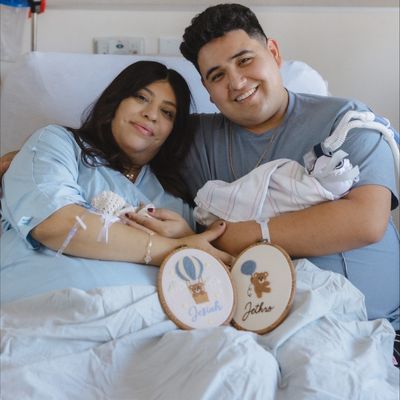
When it was time to deliver, Jessica underwent a cesarean section on Oct. 5. Jesiah was stillborn, and Jethro was born at approximately 29 weeks and admitted to the Level IV NICU at Miller Children’s & Women’s.
A Level IV NICU provides care for critically ill and premature babies with complex medical needs. The NICU at Miller Children’s & Women’s also includes the region’s largest Small Baby Unit and its Tiny Baby Program, which provide specialized care for babies born at less than 28 weeks gestation (full term is 40 weeks) or weighing less than 1,000 grams (2.2 lb). Most NICU’s don’t have these capabilities and other area hospitals often send their extremely low birth weight babies to Miller Children’s & Women’s Hospital through our Maternal/Fetal Transport Program.
Together, these resources surround the smallest and most fragile babies with specialized neonatal care and advanced technology in one place, so the team can respond quickly as each baby’s lungs, heart, brain, feeding and development needs change. The Small Baby Unit provides a developmentally appropriate next step in care, using dimmed lights and hushed sounds to mimic the mother’s womb and support micro-preemies as they continue to grow and develop. Jethro, who remains in the NICU, continues to grow stronger every day.
On the same day, Jessica and Art experienced two profoundly different moments: welcoming Jethro and saying goodbye to his identical twin brother, Jesiah.
The couple did not expect to have an opportunity to hold their sons together. Then Annie Petteys, MSN, FNP-BC, CPLC, with the Perinatal Connections Program and Pediatric Palliative Care Program, helped make that moment possible.
As Jessica and Art prepared to take photographs with Jesiah, the NICU team arranged for Jethro to be brought to their room. For a brief but deeply meaningful moment, Jessica and Art were together with both of their boys.
“We didn’t think we were ever going to have a moment where it was just our family of four,” Jessica says. “I don’t know what she did, but I’ll forever be grateful for that.”
The care team also created keepsakes honoring both boys, including photographs, a shadow box and pendants featuring their footprints.
Those gestures mattered to Jessica because they recognized something she never wanted to be overshadowed by the joy surrounding Jethro’s birth: Jesiah was also her son.
“When a family is experiencing the loss of a baby, it is important to honor that child’s life and give the family space to create memories in the time they have together,” Petteys said. “Acknowledging Jesiah as Jessica and Art’s son and Jethro’s twin helps affirm that he will always be part of their family. These moments and keepsakes can also give parents something tangible to hold on to as they grieve and remember their child.”
Finding Compassion Beyond Medical Care
As Jessica recovered from delivery and Jethro received care in the NICU, the family faced another painful milestone: saying goodbye to Jesiah.
Rev. Candace Kelly, a member of the hospital’s spiritual care team, had spent time praying with Jessica and Art and supporting them through their loss. When it was time for Jesiah to leave Jessica’s recovery room, Rev. Kelly accompanied him.
“Saying goodbye to a child is an extraordinarily painful moment for any family, and there is never enough time to say goodbye to someone you love, especially your child,” Rev. Kelly said. “We approach each family with the utmost care and respect, following their lead and doing everything we can to protect that time for them. Our role is to be present without rushing the moment, allowing parents the space they need to hold their child, speak to them and say goodbye in the way that feels right for their family.”
Having someone they knew and trusted accompany Jesiah provided comfort during an especially difficult goodbye.
“It wasn’t easy to let go, but knowing that we had that relationship with Rev. Kelly helped,” Jessica says. “It was a familiar face and not a stranger.”
That sense of connection extended throughout the hospital. Jessica remembers physicians checking on her outside scheduled appointments, nurses offering encouragement and care team members making the family feel recognized and supported. Even members of the food services and housekeeping teams became familiar faces during the couple’s hospitalization.
Taking Jethro’s NICU Journey One Day at a Time
As Jessica and Art grieved Jesiah, their attention also remained on Jethro and the uncertainty that can come with having a baby born prematurely.
Jethro’s NICU journey included both progress and setbacks. At one point, he developed an infection that required treatment.
Mohammad Adnan, M.D., medical director, Tiny Baby Program, and one of Jethro’s NICU physicians, noticed subtle signs of a possible infection while examining him and promptly ordered testing. When the results confirmed the infection, the NICU team began treatment right away.
For Jessica and Art, regular communication with Jethro’s care team made an unfamiliar and often overwhelming experience easier to navigate. Dr. Adnan checked on Jethro while also taking time to ask Jessica and Art how they were doing and whether they had questions.
“Premature babies may show only very subtle changes when something is wrong, so knowing what is normal for each baby and responding quickly to even small concerns can make an important difference,” Dr. Adnan said. “That requires close collaboration across the NICU team and with the parents, who know their baby in a way no one else does. By listening to families, keeping them informed and supporting their well-being, we can make more thoughtful care decisions and create the strongest possible environment for their baby to heal and grow.”
Lactation nurses are also supporting Jessica as she learns to pump breast milk while Jethro is currently in the NICU. They provide hands-on guidance and education to help her maintain her milk supply. The milk that Jessica pumps is given to Jethro through a feeding tube while he continues developing the strength and coordination needed to feed on his own.
While Jethro remains in the NICU, Jessica and Art are celebrating milestones that once might have seemed small but now carry new meaning. Each step forward brings him closer to going home with them to Arizona.
They also look forward to making memories together beyond the NICU, including a future family trip to Disneyland. Even as they imagine those moments with Jethro, Jesiah remains part of their family’s story.
Learning That Grief and Joy Can Exist Together
Jessica and Art are learning not to measure healing by whether the painful days have ended. Instead, they are allowing themselves to experience the emotions that come with them.
Some days bring excitement about Jethro’s progress. Others bring renewed grief for the moments Jesiah will not experience with his brother. Jessica no longer sees those feelings as being in conflict or believes that one diminishes the other.
“It’s OK to feel angry, confused, sad and happy,” said Jessica. “Grief and joy can exist at the same time.”
Art hopes other parents experiencing pregnancy or infant loss will recognize the love and effort they gave their children, even when the outcome was beyond their control.
Jessica often returns to memories of the boys together before they were born, including ultrasound appointments when she watched Jethro play with Jesiah in the womb. She plans to share those moments with Jethro as he grows so he will know about the twin who was beside him from the beginning.
The family also remains connected to the people who support them as they navigate celebration and grief at the same time.
“I don’t know how we could ever repay that kind of love,” Jessica says. “We’ll forever be grateful to MemorialCare and everyone here at Miller Children’s & Women’s Hospital.”
As Jethro reaches new milestones in the NICU, Jessica and Art will continue speaking Jesiah’s name and making space for both brothers in the memories their family creates next.
Medically Reviewed By
Mohammad Adnan, M.D., medical director, Tiny Baby Program, Miller Children’s & Women’s Hospital
Alice Sherman-Brown, M.D., maternal-fetal medicine specialist, Miller Children’s & Women’s Hospital
Annie Petteys, MSN, FNP-BC, CPLC, Perinatal Connections Program and Pediatric Palliative Care Program
Vineet Shrivastava, M.D., medical director, maternal fetal medicine specialist, Miller Children’s & Women’s Hospital
About the Experts
Mohammad Adnan, M.D., is director of the Tiny Baby Program at Miller Children’s & Women’s Hospital and a neonatal-perinatal medicine specialist who cares for fragile premature infants in the neonatal intensive care unit.
Alice Sherman-Brown, M.D. is a maternal-fetal medicine specialist with the High-Risk Pregnancy Program at Miller Children’s & Women’s Hospital who specializes in caring for high-risk pregnancies.
Annie Petteys, MSN, FNP-BC, CPLC is a nurse practitioner in perinatal and pediatric palliative care at Miller Children’s & Women’s Hospital, supporting patients and families navigating complex pregnancies and serious medical conditions.
Vineet Shrivastava, M.D. is a board-certified maternal-fetal medicine specialist at Miller Children’s & Women’s Hospital whose clinical focus includes high-risk pregnancies, multiple gestations, fetal growth restriction and other pregnancy complications.