Published on Nov. 6, 2026
Long before her son was born in 2017, Kelly Mayer, OTD, OTR/L, had already fought hard to become a mother. After years of infertility and three pregnancy losses, she made the decision to use an egg donor. When she finally became pregnant with her son, Maddox, making it through that precarious first trimester felt like a victory.
From there, Kelly was closely monitored, and with each trimester she completed, she was one step closer to meeting the son she had longed for. Toward the end of her third trimester, she was seeing Kenneth Chan, M.D., OBGYN at the Cherese Mari Laulhere BirthCare Center at Miller Children’s & Women’s Hospital, twice a week.
When she arrived at Miller Children’s & Women’s at 40 weeks pregnant, she was ready to meet the baby she had hoped for.
Within moments of Maddox’s birth, however, the joy of delivery shifted into fear and disbelief. A rare pregnancy complication called placenta accreta caused severe bleeding, and Kelly’s care team had to move quickly to protect her life while ensuring that Maddox remained safe.
“They did everything to save me,” Kelly says. “Because I was at a hospital dedicated to women and children, the specialists and resources I needed were already there. That’s why I am here today.”
Why Placenta Accreta is Dangerous
During pregnancy, the placenta provides oxygen and nutrients to the baby, and after birth, it usually separates from the wall of the uterus. With placenta accreta, the placenta grows too deeply into the uterine wall and cannot detach as expected. When that happens, the bleeding can be severe. Patients lose an average of 3 to 5 liters of blood, close to the entire blood supply of an adult body, and about half ultimately need a hysterectomy.
Most cases are linked to a previous cesarean delivery, but Kelly had never had one. Maddox was her first baby, delivered vaginally. Placenta accreta also often causes no symptoms and does not always show up on an ultrasound, even with close monitoring like Kelly’s twice-weekly visits. Her case is not as unusual as it may seem though: one study found that about 1 in 3 cases were not suspected before delivery.
“Placenta accreta is uncommon, affecting roughly 0.17% of births, but it can become serious very quickly when the placenta does not release normally after delivery,” says Dr. Chan. “In some cases, the diagnosis is clear before delivery because of a patient’s history or ultrasound findings. In other cases, like Kelly’s, there may not be obvious signs until the placenta is delivered, which is why it is so important to have an experienced team prepared to respond immediately.”
That is why where a mother chooses to deliver her baby matters. When placenta accreta is discovered in the delivery room, there is no time to plan, and the care team must decide within minutes how to stop the bleeding. At Miller Children’s & Women’s, the specialists and resources needed to respond were already there. For Kelly, who had fought so hard to become a mother, the decisions made in those minutes would save her life and shape her future, too.
When Kelly’s Delivery Became an Emergency
Shortly after her vaginal delivery, Kelly’s placenta failed to separate, and she began losing blood faster than her body could replace it. She remembers the moment less as a clear sequence and more in flashes: the urgency in the room, the team moving quickly around her and the sudden realization that the delivery had become something much more serious.
Miller Children’s & Women’s high-risk pregnancy team first worked to control the bleeding in the delivery room while giving her blood transfusions to help restore the blood volume and oxygen-carrying red blood cells her body urgently needed. Once she was stable enough to be moved, she was taken to the operating room so her team could continue trying to stop the hemorrhage.
As Kelly’s condition became more critical, additional specialists were called in to help. Miller Children’s & Women’s is one of only a few hospitals in the region with maternal-fetal medicine specialists in-house 24/7, something that is becoming harder to find in community hospitals. These obstetricians complete three additional years of training to care for complicated and high-risk pregnancies. At the time of Kelly’s delivery, Michael Nageotte, M.D. — who was medical director of the high-risk pregnancy program at the time and has since retired — joined Dr. Chan at her side.
“Placenta accreta can become life-threatening very quickly because the bleeding can be severe and difficult to control,” says Dr. Nageotte. “In those moments, having obstetric, maternal-fetal medicine, critical care, anesthesia and blood bank teams available allows us to respond immediately when a mother’s condition changes.”
The team ultimately determined that an emergency hysterectomy was the safest way to control the bleeding and save Kelly’s life. By the time the emergency was over, Kelly had received 35 to 36 units of blood.
Specialized Care After a High-Risk Delivery
After surgery, Kelly was moved to the Perinatal Special Care Unit, a specialized area within the Cherese Mari Laulhere BirthCare Center where women with high-risk pregnancies or complex postpartum needs can be closely monitored by nurses and physicians. After a hemorrhage, emergency surgery and massive blood loss, that level of watchful care was exactly what she needed.
As she began to understand the extent of what had happened, one thing brought her comfort: Maddox was still nearby and receiving the care he needed, too.
Keeping Mom and Baby Together
Maddox was healthy and did not need neonatal intensive care, but because Miller Children’s & Women’s cares for mothers and newborns under one roof newborn specialists were close by if anything changed. While Kelly was in surgery, Maddox stayed with her partner in the Mother Baby Unit, so he did not have to choose between waiting for Kelly and being with their newborn son.
Once Kelly was settled in the Perinatal Special Care Unit, Maddox was able to stay with her for the rest of her hospitalization. As nurses and physicians closely monitored her recovery, Maddox continued to receive his newborn care at her side, and mother and son could finally bond through skin-to-skin contact and begin breastfeeding.
“In that moment, I needed a team that could respond to what was happening to me, and Maddox needed to be watched and cared for as a newborn,” Kelly says. “Having Miller Children’s & Women’s meant both of us got the care we needed with a team I trusted and without being separated.”
Kelly spent about three days in the Perinatal Special Care Unit. As the immediate danger passed and she began to feel a little stronger, the weight of what had happened started to set in.
Healing After Birth Trauma
While she was still in the hospital, Kelly’s body was recovering from hemorrhage, an emergency hysterectomy and significant blood loss. At the same time, she was trying to process the trauma of nearly losing her life just after finally giving birth to her son, and the reality that she would never be able to carry another pregnancy.
“It was devastating,” Kelly says. “There was a lot of, ‘Why me? Why all these problems? Why can’t I have more children?’ It takes time to realize that it’s not a punishment, even though it can feel like that at the time.”
Her care team made sure she did not have to work through those questions alone. Before she left the hospital, Kelly was connected with the Perinatal Connections Program at Miller Children’s & Women’s, which supports mothers and families through birth planning, bereavement care, and postpartum and neonatal follow-up care. For Kelly, that support meant having a team to help her make sense of a birth that had not gone as planned and grieve the family she had pictured. A social worker also connected her with one-on-one support to help her process the trauma.
The Miller Children’s & Women’s palliative care team added another layer of support, working alongside Kelly’s other doctors during an uncertain time.
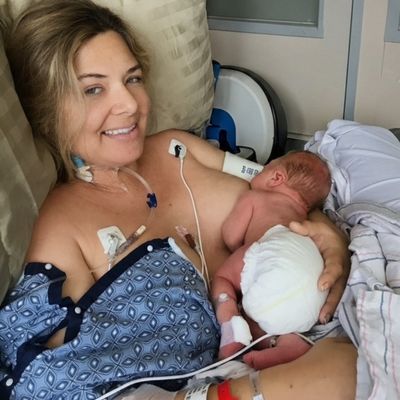
“Palliative care is often mistaken for end-of-life care, but it is really about relieving the physical and emotional stress of a serious medical experience and improving quality of life for the whole family,” says Annie Petteys, MSN, FNP-BC, CPLC, nurse practitioner and fetal care coordinator, Perinatal Connections Program and Pediatric Palliative Care Program, Miller Children’s & Women’s. “For a mom like Kelly, that means giving her and her family space to talk through their fears, goals and hopes, so they do not have to carry an experience like this alone.”
Her physical recovery also affected how she could feed her son. Kelly’s body struggled to produce milk following the emergency and hysterectomy, so a lactation consultant worked with her one-on-one at her bedside to support her feeding goals. Moms who need more help after going home can also see the board-certified lactation consultants at the BirthCare Center’s Outpatient Lactation Clinic.
Finding Her Footing at Home
When Kelly was well enough to go home, her care team’s support went with her. Through the Welcome Baby Program, a nurse checked on Kelly and Maddox, answered questions and offered reassurance as they settled into life as a family.
Still, even the parts of new motherhood that were supposed to feel ordinary carried the weight of what Kelly had survived. When she returned to Miller Children’s & Women’s for a new parent group, she sat among other mothers holding their babies and talking about the early days of parenting. The group offered connection and support during a vulnerable time, even as Kelly was still learning how to carry the memory of what had happened there.
Step by step, the care that began in the delivery room carried Kelly through those first months, helping her feel steady again as a mother, a survivor and herself.
How Kelly Turned Her Experience Into Purpose
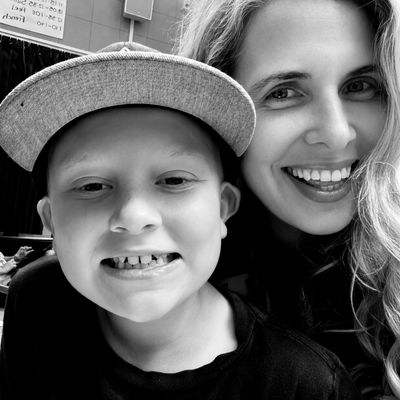
Today, Maddox is 9 years old, and Kelly sees her experience through a different lens.
What once felt impossible to understand has become part of the reason she wants to support others through adversity, loss and life-changing transitions.
Kelly recently completed her Doctorate in Occupational Therapy and is opening a private practice. Through her work, she hopes to support people during difficult seasons, including women experiencing infertility, pregnancy loss, birth trauma or complex recovery after pregnancy.
“I never want someone to feel like they have to rush through grief or just ‘move on,’” Kelly says. “Healing takes time, support and compassion. When you survive something other people may not fully understand, sometimes the most powerful thing someone can do is simply listen.”
If you are expecting and have been told your pregnancy is high risk, or you want to know what support is in place if your delivery does not go as planned, the team at Miller Children’s & Women’s Hospital is ready to help. Learn more about the High-Risk Pregnancy Program and the Perinatal Special Care Unit at the Cherese Mari Laulhere BirthCare Center, and talk with your OBGYN about what specialized care may be right for you and your baby.
Medically Reviewed By
Kenneth Chan, M.D., OBGYN, Cherese Mari Laulhere BirthCare Center, Miller Children’s & Women’s Hospital
About the Expert
Kenneth Chan, M.D., is a board-certified obstetrician-gynecologist and maternal-fetal medicine specialist at Miller Children’s & Women’s Hospital, where he cares for women with high-risk pregnancies and leads efforts to reduce cesarean section rates. He completed his maternal-fetal medicine fellowship at Harbor-UCLA Medical Center and is an associate clinical professor in the Department of Obstetrics and Gynecology at the University of California, Irvine.