Published on Feb. 16, 2026
When Blossum found out she was pregnant in 2022, her heart was filled with joy and hope. After the heartbreak of a miscarriage in 2020, this new pregnancy felt like a “blessing,” a chance to welcome the rainbow baby she and her husband had been dreaming of.
A “rainbow baby” is more than just a term; it represents light after the storm, a symbol of healing and promise following loss. For Blossum, this was the moment she had been dreaming of—her heart full of gratitude and anticipation for the life growing inside her, a baby she and her husband lovingly named Blessing.
Early in her pregnancy, Blossum’s OB-GYN noticed something concerning during a routine checkup, her cervix had begun to shorten at just 19 weeks. This condition can significantly increase the risk of preterm labor, which may lead to serious complications for both mother and baby. For several weeks, Blossum and her doctor closely monitored her cervix, hoping to avoid further issues.
But by 27 weeks, her cervix had shortened even more, raising the risk of early delivery. At that point, her doctor referred her to Miller Children’s & Women’s Hospital, known for its expertise in in managing complex, high-risk pregnancies through a multidisciplinary team and specialized unit dedicated to advanced care for moms and babies.
Under One Roof - Why Specialized Care for Mom & Baby Matters
At 27 weeks, just two days before giving birth, Blossum was admitted into the Perinatal Special Care Unit (PSCU) at the Cherese Mari Laulhere BirthCare Center and placed on bed rest to help prevent active labor. This comforting space was designed for mothers navigating high-risk pregnancies, offering private rooms and constant monitoring of both mom and baby in a calm, reassuring environment. Families find peace of mind knowing Miller Children’s & Women’s provides truly exceptional care, with around-the-clock 24/7 access to anesthesia and maternal-fetal medicine specialists, supported by advanced technology to safely keep the baby in the mom’s womb as long as possible to support natural development.
Blossum was in the PSCU for two days prior to her experiencing contractions. At first, her care team monitored the contractions closely, allowing them to progress naturally. But when they noticed that each contraction caused Blessing’s heart rate to spike, they knew it was time to act.
To protect the baby and reduce stress on her heart, the team made the decision to induce labor—starting the birthing process with medication rather than waiting for it to happen naturally. Induction is often recommended in situations like Blossum’s because it helps prevent further complications, such as prolonged contractions that could put additional strain on the baby. By moving labor along in a controlled, monitored way, the care team ensured that Blessing could be delivered sooner and in the safest way possible.
Coordinated Care Brings Comfort and Safety During Blossum’s High-Risk Birth
When it was time for Blossum to deliver, a full multi-disciplinary care team was by her side in Miller Children’s & Women’s private labor and delivery suite—maternal-fetal medicine specialists, nurses, and neonatologists all working together to ensure the safest outcome for both mom and baby. Their collaboration and expertise provided constant support and reassurance throughout the process.
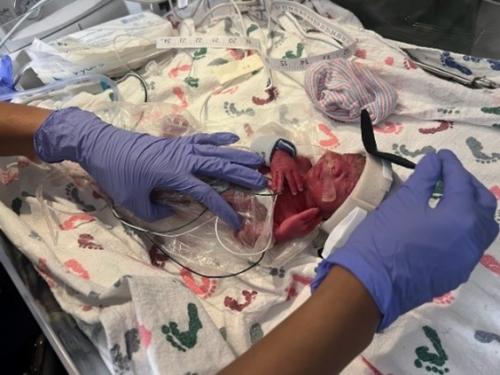
Blessing was born weighing just 2.6 pounds. Because she was so small, struggling to breathe on her own due to underdeveloped lungs and had jaundice, Blessing was immediately admitted to the Level IV Neonatal Intensive Care Unit (NICU)—the highest level of care recognized by the American Academy of Pediatrics. Within the advanced NICU, there is even a more acute Small Baby Unit, which is the largest in the region and is designed to care for extremely premature and high risk infants. This specialized unit is designed to mimic the mother’s womb, with dim lights, quieter medical technology and where the care team talks in hushed voices. The Small Baby Unit, is designed to keep stress to the baby down, giving the baby time to develop as close to being in the womb as possible, giving Blessing that specialized start she needed.
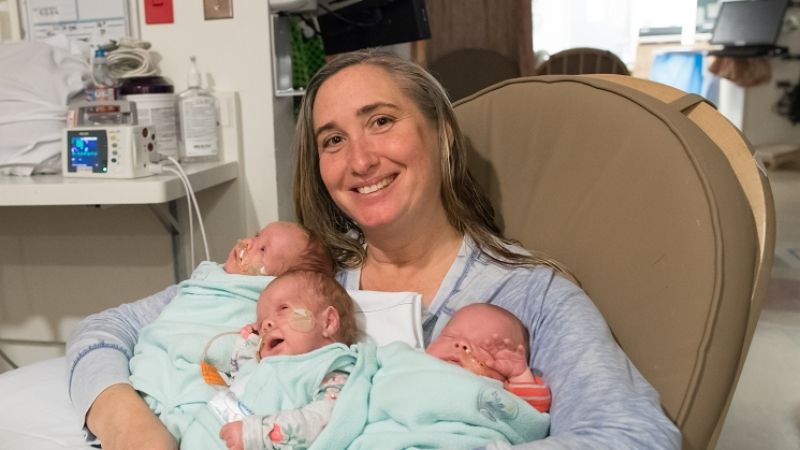
“When I gave birth to Blessing, I wasn’t able to hold her right away, it was about a week until I held her for the very first time,” said Blossum. “When I was finally able to hold her, once her jaundice cleared up after about a week, it was the best feeling. I felt calm and reassured that everything was going to be ok.”
Once Blessing’s jaundice was cleared, her NICU care team continued with the newborn screening exam to see how she was developing, such as checking her lungs, her liver, and even her heart. It was during that exam, about a week after Blessing was born, that they found a hole in her heart, which is called patent ductus arteriosus (PDA).
Children's Heart Institute to the Rescue
According to the Centers for Disease Control and Prevention (CDC), congenital heart defects are the most common type of birth defect, affecting about 1% of all babies born in the United States.
However, when the care team looked further into the hole in her heart, they diagnosed her with two serious conditions: PDA which accounts for about 60% of congenital heart defects in babies born before 29 weeks and bronchopulmonary dysplasia (BPD) which affects about 1 in 3 very low birth weight babies shortly after birth.
Luckily, Blessing was at Miller Children’s & Women’s—one of only two hospitals in the region that offer maternity and pediatric specialty care under one roof. Because she also had immediate access to a full‑service children’s hospital, she could receive care from over 50 pediatric specialties and their corresponding specialists, including a pediatric cardiologist. For medically fragile infants, this level of specialized care isn’t just beneficial; it’s essential to giving them the safest start.
The Children’s Heart Institute pediatric cardiologists at Miller Children’s & Women’s worked hand-in-hand with the NICU team, creating a seamless plan to stabilize Blessing’s heart and support her fragile lungs. This collaboration—between pediatric cardiologists, neonatologists, nurses, and Blossum—ensured that every decision was made with precision and compassion, giving Blessing the strongest chance to thrive.
PDA is a heart condition that occurs when a blood vessel called the ductus arteriosus — essential for fetal circulation — fails to close after birth. This causes abnormal blood flow between major arteries and can make it difficult for babies to breathe. If left untreated, PDA can lead to heart failure and other complications.
While Blessing was still in the NICU, she underwent a minimally invasive surgery to close the opening using the Amplatzer Piccolo Occluder — a pea-sized device inserted through a catheter, avoiding the need for open cardiac surgery on a tiny preemie, where often hearts are smaller than a walnut.
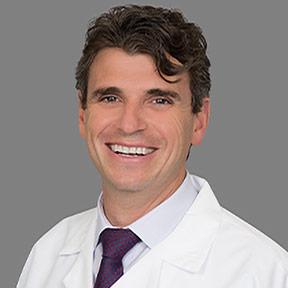
“The Amplatzer Piccolo Occluder is a self-expanding, wire mesh device that seals the opening without requiring surgery,” says Saar Danon, M.D., medical director, pediatric cardiology and congenital cardiac catheterization, Children’s Heart Institute, Miller Children’s & Women’s. “It enters through a small incision in the thigh and is guided through the blood vessels to the heart, successfully sealing the PDA.”
Even after the successful heart procedure, Blessing faced another challenge: BPD, a chronic lung condition that affects premature infants, especially those born weighing less than 2.5 pounds. BPD develops when underdeveloped lungs require prolonged breathing support, such as oxygen therapy or mechanical ventilation, which can irritate and damage the delicate lung tissue. In babies with BPD, the lungs may have fewer and larger air sacs, making it harder to exchange oxygen efficiently.
Because Blessing’s lungs were underdeveloped, she needed a ventilator to help her breathe. Over time, she was carefully weaned off supplemental oxygen to allow her lungs to grow stronger and function on their own. Treatment for BPD often includes respiratory support, medications, and nutritional care — all of which were provided by the NICU team at Miller Children’s & Women’s.
Blessing remained in the NICU for four months, from August to December 2022. During that time, Blossum stayed by her side, supported not only by the medical team but also by the hospital’s family centered approach to care. Nurses and specialists kept her informed, answered questions, and provided guidance through each stage of Blessing’s recovery. Miller Children’s & Women’s understands that caring for a newborn in the NICU is a journey for the entire family, which is why they offer resources designed to support parents emotionally, physically and practically.
Helping Parents Stay Strong While Their Babies Grow Strong
Throughout Blessing’s hospitalization, Blossum also relied on in-hospital resources that helped her stay informed, connected, and present at the bedside, through the hospital’s Family Resource Center. This welcoming space gives families access to educational materials, support groups, and community resources. Parents can learn more about their child’s condition, connect with other families, or simply take a moment to recharge. Miller Children’s & Women’s also offers amenities like family lounges and lactation support—helping parents stay close and involved throughout their baby’s NICU stay.
This family centered approach to care helped Blossum feel empowered during one of the most challenging times of her life. With the NICU team and this supportive care by her side, she could focus on Blessing’s healing and celebrate every milestone along the way.
Ready for Home
As Blessing grew stronger, the care team prepared Blossum for a safe transition home, teaching her how to care for Blessing and manage the supplemental oxygen she would still need while her lungs continued to develop. To ensure she received the specialized care she needed after discharge, the NICU team connected Blossum to the High‑Risk Infant Follow‑Up Program within the Stramski Children’s Developmental Center — an outpatient clinic designed for babies born prematurely or at high risk, providing comprehensive monitoring and developmental support through a multidisciplinary team of nurse practitioners, psychologists, rehab therapists, and social workers. The High-Risk Infant Follow-Up Program provides highly specialized, multidisciplinary care which includes early‑detection developmental assessments and coordinated follow‑up care beginning in the NICU and continuing through age 3, ensuring a uniquely seamless progression of support for high‑risk infants.
With their guidance, Blessing was gradually weaned off oxygen as she grew stronger, eventually breathing completely on her own.
Blessings Continue Today
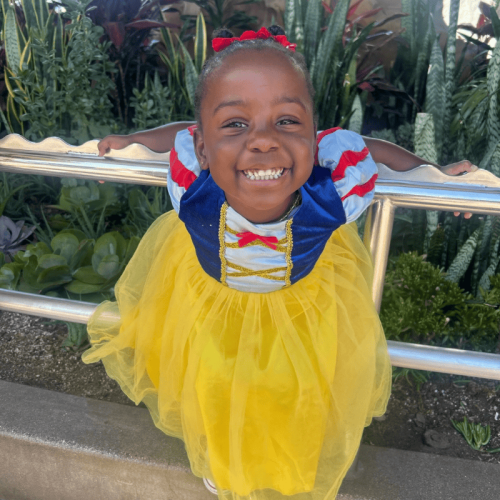
Today, Blessing is a thriving 3-year-old who has completed physical and occupational therapy and is living life like most kids her age. She loves to draw, dance with her mom, and sing songs from the movie “Kpop Demon Hunters.”
“Blessing is amazing!” says Blossum. “She’s thriving. When she’s not singing or drawing, she’s chatting about anything and everything. She’s reaching all her milestones, eats well, and her surgery results are incredible. You’d never know she was born premature unless someone told you. My daughter’s progress is nothing short of a blessing.”