
Published on July 29, 2025
Updated on July 1, 2026
Each July, Cleft and Craniofacial Awareness & Prevention Month shines a spotlight on children born with craniofacial conditions, including cleft lip and cleft palate. Craniofacial anomalies affect the structure of a child’s head and face and can significantly impact feeding, speech, hearing, and dental development. Raising awareness of these conditions helps families connect with early, specialized care that can lead to life-changing outcomes.
Understanding Cleft Lip and Palate
A cleft lip is an opening in the upper lip. A cleft palate is an opening in the roof of the mouth. Clefts are the result of incomplete development of the lip or palate during the very early stages of pregnancy. The majority of clefts appear to be due to genetic or environmental factors, though there is no known cause in many cases. About 2,320 babies are born in the United States each year with a cleft lip and palate, and 3,560 babies are born with a cleft lip with or without cleft palate. Cleft lip, with or without cleft palate, occurs in approximately one in 700 infants born worldwide each year.
Other Common Craniofacial Conditions
Pierre Robin Syndrome
Pierre Robin Syndrome is also known as Pierre Robin Sequence. At seven to ten weeks of gestation, there is usually rapid growth of the lower jaw. This growth leaves a space at the bottom of the mouth for the tongue. The Robin Sequence starts when the lower jaw remains relatively small (called micrognathia). This pushes the tongue to the roof of the mouth and back toward the throat. In this position, the tongue can block the roof of the mouth, sometimes causing a cleft palate. This sequencing of events is why the condition can be referred to as the Robin Sequence. Babies with this condition may need support to address problems with breathing, feeding, sleeping, and hearing.
Hemifacial Microsomia
Hemifacial microsomia is also called Goldenhar syndrome or Oculo-auriculo-vertebral dysplasia (referring to eye-ear-and bony issues). The skeletal issues may involve an abnormal curvature of the spine (scoliosis and/or Kyphosis) and rib abnormalities. Underdevelopment of one side of the face often affects the jaw, eye, external and middle ear, and some of the nerves that allow facial movement. Some children may have a heart defect, cleft lip and/or palate, and hydrocephalus. In addition to craniofacial care, these children may also receive care from ophthalmologists, neurologists, cardiologists, and orthopedic specialists.
Microtia
Microtia is a condition where one or both ears do not fully develop during fetal growth, resulting in absent or partially formed ears. This can result in hearing loss, and an external ear deformity. Some of these patients may also have congenital heart disease. It is important that these patients are evaluated and cared for by otolaryngologists and audiologists as soon as possible. Other team members provide speech support and offer options if the patient and family would like reconstruction of the outer ear.
Comprehensive Craniofacial Care at Miller Children's & Women's
The Craniofacial Program within the Stramski Children’s Developmental Center at Miller Children’s & Women’s Hospital provides comprehensive, team-based care for children with these and other craniofacial differences. As an approved California Children’s Services (CCS) Special Care Center (SCC), the Craniofacial Program ensures that a specially designed multidisciplinary care team coordinates patient care based on their medical diagnosis and the complexity of their disease.
A dedicated craniofacial care team supports each child and family from infancy through young adulthood, up to age 21. The team includes plastic and maxillofacial surgeons, neurosurgeons, otolaryngologists, pediatric dentists, orthodontists, feeding specialists, speech-language pathologists, audiologists, psychologists, social workers, and a nurse coordinator. This collaborative approach ensures that every child receives a personalized treatment plan tailored to their unique medical and developmental needs.
Surgical Treatment and Interventions
Babies born with a cleft will need surgery to ensure they thrive. Children with a cleft may have trouble eating, breathing, speaking, and hearing. Treatments vary. A baby's cleft lip repair surgery may be done in coordination with ear surgery to remove fluid from the middle ear and improve/restore hearing. Children with more complicated craniofacial syndromes may need numerous surgeries throughout infancy, childhood, and young adulthood.
Long Term Support at the Children’s Village
Through the Cherese Mari Laulhere Children’s Village, children receive extensive follow-up care to monitor their progress and to support their development. Feeding specialists and speech-language pathologists provide targeted interventions to support children's growth and speech. Psychologists and social workers offer counseling and support to help families cope with the emotional and social challenges of cleft lip and palate, including self-esteem issues, bullying, developmental concerns, and the stress experienced by parents and siblings.
Additionally, through Miller Children’s & Women’s partnership with the Children's Dental Health Clinic and community orthodontists, patients receive care from pediatric dentists and orthodontists, ensuring early dental hygiene education and orthodontic treatments to maintain oral health and functional integrity of patients’ teeth and jaws. By offering a comprehensive range of services, from surgical interventions to speech therapy and psychosocial support, the craniofacial care team ensures that each child receives individualized care tailored to their unique needs.
Additional Support for Families
Families looking for additional support can find valuable information and resources through trusted organizations like the American Cleft Palate-Craniofacial Association and MyFace. Books such as I've Just Seen a Face: A Practical and Emotional Guide for Parents of Children Born with Cleft Lip and Palate by Amy Mendillo also offer practical guidance and emotional support for parents navigating a cleft diagnosis.
Message of Gratitude
Our team is honored to care for these patients from birth through young adulthood. These remarkable children and their families teach us so much. One inspirational example is a preschool-aged patient with Goldenhar syndrome. When she approaches other children on the playground in the park, she shares her name, explains that she was born without an ear on one side but has one on the other, and then asks if they would like to play. The strength and love shown by families is humbling. With fierce loyalty, they support their children and siblings through numerous therapies and often painful medical procedures. It is a privilege to know these families and be part of their care.
About the Author
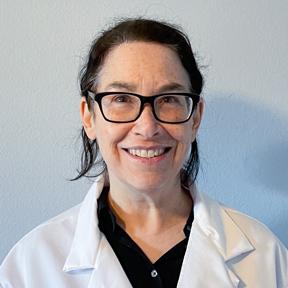
Melanie Blumenthal, M.D., works at the Cherese Mari Laulhere Children's Village at Miller Children's & Women's Hospital and ABC Pediatrics in Los Alamitos. They have two adult children- a son and a daughter. She loves visiting her children. She is taking piano lessons and learning to cook with tofu. She loves finding a new book to read at the library.