Published on Nov. 12, 2025
When Childhood Isn’t Simple
For most families, childhood is a time of growth, milestones, and everyday adventures. But for some, the journey is more complicated — especially for children born extremely premature or those diagnosed with chronic or complex medical conditions. These kids face years of overcoming developmental delays and ongoing health challenges. For them, children’s hospitals like Miller Children’s & Women’s Hospital are more than a place for care, they’re a safety net and often their medical home—the central place where an entire network of specialists and care team members work together in one coordinated system that knows the child’s full health story.
Care Designed Just for Kids
At Miller Children’s & Women’s Hospital, we understand that children aren’t just small adults. Their bodies, minds, and emotions require care that’s tailored to their unique needs. That’s why Miller Children’s & Women’s Hospital brings together more than 30 pediatric specialties under one roof, ensuring every child receives expert, coordinated care—whether they’re managing cystic fibrosis, congenital heart defects, cancer, rare genetic disorders, or other complex conditions.
Our multidisciplinary teams work closely with families, guiding them through every step of their child’s medical journey. From the Neonatal Intensive Care Unit (NICU) follow-up clinics to pediatric specialty programs, we provide continuity of care that supports children as they grow and develop. Beyond medical treatment, our care teams offer psychosocial support, education, and advocacy, helping families navigate the emotional and practical challenges of chronic illness.
Healing in a Child-Friendly Environment
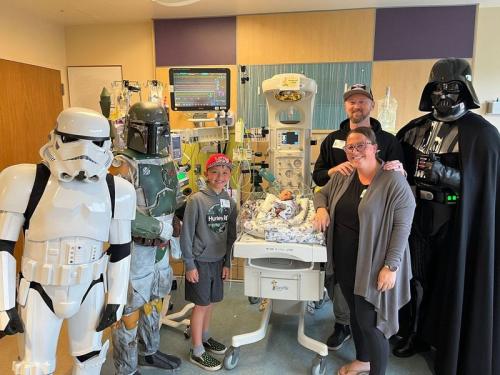
Children’s hospitals are uniquely equipped to meet children’s needs. Our environment is designed to be welcoming and comforting for kids and their families, with spaces created just for children—from colorful artwork and playrooms to kid-sized equipment and family-friendly amenities. Our Cherese Mari Laulhere Child Life Program utilizes the Power of Play to reduce anxiety and promote healing, offering everything from medical play-based interventions to interactive gaming stations and special character visits. These moments of joy and normalcy help children feel safe and supported during their hospital stay.
Our commitment to children’s health is further reflected in the strength of our programs and institutes. The Jonathan Jaques Children’s Cancer Institute provides comprehensive care for children with cancer and sickle cell disease, including support for long-term wellness through its Adolescent & Young Adult Survivorship Program and specialized cognitive care through the Executive Functioning Program.
Our Children’s Heart Institute provides total prenatal, infant, pediatric, and young adult heart care for children with congenital or acquired heart disease, even those diagnosed later in life or with a family history of heart problems. With board-certified pediatric cardiologists and surgeons collaborating under one roof, families benefit from coordinated treatment, advanced diagnostics, and ongoing support.
Our Orthopedic Center, Gastroenterology & Nutrition Center, and Children’s Pulmonary Institute are designed to help kids with injuries like everyday breaks to complex conditions like Cystic Fibrosis, that need oversight of five different specialties to care for one child. Our pediatric Surgical Center is designed so that pre-operative waiting areas are filled with toys and Child Life specialists who mentally prepare the child for surgery. The Injury Prevention Program teaches families about playground safety, car seat installation, infant CPR, and toy recalls.
Impact of Medicaid Cuts
We also recognize that access to care depends on strong partnerships and reliable funding. Programs like Medicaid and the Children’s Hospitals Graduate Medical Education program help us provide care for children who need it most. But right now, proposed cuts to Medicaid funding are putting that care at risk. If these cuts move forward, children’s hospitals like ours could lose essential resources, impacting everything from therapy and screenings to specialty programs and long-term care. The Children’s Hospitals Graduate Medical Education program is also facing funding threats, despite being critical to training the current and next generations of pediatricians and pediatric subspecialists and supporting more than half of the nation’s pediatric subspecialists. These changes could mean fewer providers and fewer options for families who already face significant health challenges.
That’s why Miller Children’s & Women’s Hospital continues to advocate for resources that support families and ensure every child can receive expert care, regardless of their medical complexity.
Expanding Access Through Networks
To further strengthen our support for families, in 2025, we launched the Miller Children’s Care Network—a comprehensive system connecting families with primary and specialty pediatric care across South Los Angeles and North Orange County. This network enhances access, improves data-sharing, and fosters collaboration between pediatricians and specialists, ensuring seamless care for children with chronic illnesses or developmental delays.
In addition, our Neonatal Network, along with our maternal and children’s transport programs, ensures that children at lower acuity area hospitals are promptly transported to us to ensure high-risk and expedited care, serving as a regional care provider beyond our local community.