
Published on Nov. 18, 2026
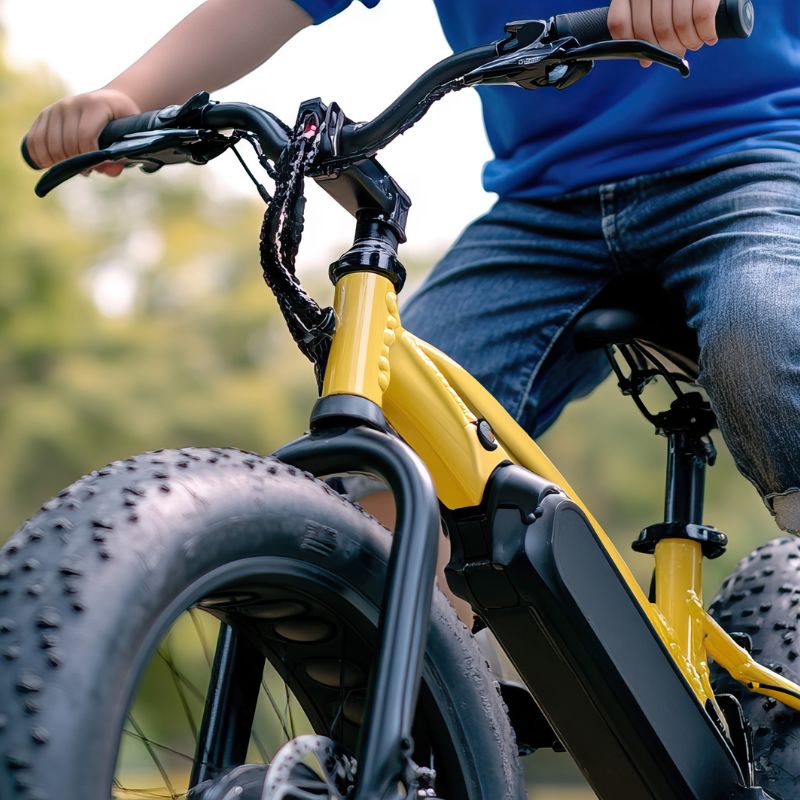
E-bikes have become increasingly popular among children and teens, providing a fast way to travel. Unfortunately, that popularity has been accompanied by a sharp rise in serious collisions.
According to a UC San Diego analysis of California Highway Patrol collision data, reported e-bike collisions in California increased from just two in 2018 to 1,500 in 2024. While some crashes can result in minor injuries, parents may not realize that high-powered e-bikes can reach speeds and generate forces more comparable to motorcycles than traditional bicycles. At those speeds, a collision can cause life-altering injuries.
As a pediatric orthopedic surgeon, I see children with injuries caused by bicycle, scooter and e-bike crashes. Some injuries can be treated with casting or bracing, but high-speed collisions can cause complex fractures with bones crushed beyond repair, lasting damage to joints, and severe soft tissue compromise. These injuries can result in multiple surgeries, long-term mobility challenges and permanent loss of function, despite our best efforts.
How Can E-Bike Injuries Affect a Child’s Growth?
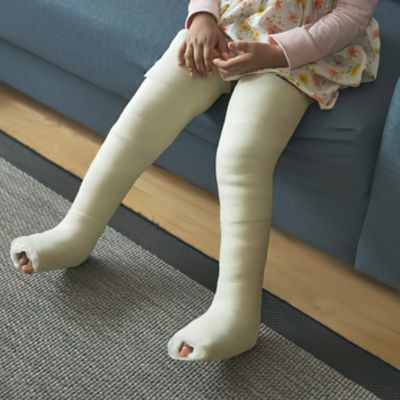 Children face additional risks because their bones are still developing. Growth plates, which are areas of cartilage near the ends of bones, help determine how bones grow and mature. Damage to these areas may lead to differences in limb length or joint deformities as a child grows. However, extremity injuries are only one potential consequence. Associated head injuries, spinal injuries, and emotional trauma can also permanently change a child’s life.
Helmets and other protective equipment remain essential and may reduce the severity of certain injuries, but they cannot eliminate the forces involved in a high-speed crash. A helmet does not prevent a child’s arms or legs from sustaining devastating trauma.
What Should Parents Consider Before Letting a Child Ride an E-Bike?
Parents should look beyond whether a vehicle is marketed as an “e-bike,” and be aware that the speed capacity of an e-bike often goes well beyond what is listed on its labeling. If the vehicle’s potential speed, weight and power are more comparable to a motorcycle, it should be treated like one. Children and teens who lack the training, maturity and licensing required to operate a motorcycle should not be permitted to operate these similarly high-powered vehicles.
One crash can cause consequences that last a lifetime. The safest choice is not simply finding a better helmet or a better-fitting vehicle, but recognizing when an e-bike has motorcycle-level power, and keeping children from operating a vehicle they are not developmentally prepared to handle.
Where Can Children Receive Pediatric Orthopedic Care?
At Miller Children's & Women's Hospital in Long Beach, we care for children with injuries ranging from simple fractures to more complex injuries at our Level II Trauma Center, with convenient outpatient follow-up located at the Cherese Mari Laulhere Children’s Village. Our group of seven pediatric orthopedic surgeons have completed additional years of specialized training focused exclusively on children, allowing us to treat injuries that can affect growth and development. Our goal is always to help children heal safely and get back to being kids.
For Orange County residents, non-emergent pediatric orthopedic care and outpatient follow-up care is available through the Fountain Valley Outpatient Specialty Center and MemorialCare Medical Group - Irvine Barranca, allowing children to receive expert care closer to home when needed, while remaining connected to the resources of Miller Children's & Women's Hospital.
Medically Reviewed By:
Emory Chang, M.D., orthopedic surgeon, Orthopedic Center, Miller Children’s & Women’s Hospital
About the Author:
Emory Chang, M.D., is a pediatric board certified orthopaedic surgeon at the Orthopedic Center at MemorialCare Miller Children's & Women's Hospital specializing in correction of congenital and acquired spinal/limb deformities as well as pediatric orthopaedic trauma.
He received his undergraduate degree in Molecular Biology at the University of California at Berkeley and his medical degree from the University of California at San Diego. Dr. Chang then went on to complete his general orthopaedic residency training at the University of Southern California. Afterwards, he completed his pediatric orthopaedic fellowship at Children's Hospital of Los Angeles.
Since completing his specialty training, Dr. Chang has pursued further sub-specialty training in limb lengthening and reconstruction as well as the Ponseti method of non-operative clubfoot management.
He is a member of the Pediatric Orthopaedic Society of North America (POSNA) and has consulted on the development of several pediatric specific implants for use in the spine and extremities.