
Published on March 1, 2022
Updated on Aug. 25, 2026
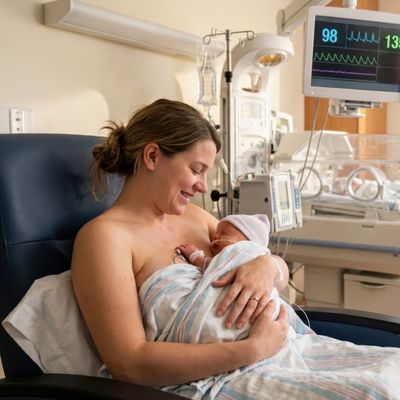
Typically, after a mother gives birth, her milk supply may take two to four days to increase to meet her baby’s growing demand. However, when a baby is born prematurely there may be a longer delay in milk production. The Neonatal Intensive Care Unit (NICU) at Miller Children’s & Women’s Hospital has a variety of programs available to assist a mother with a premature infant meet her breastfeeding goals.
Lactation consultants, who also are registered nurses with NICU experience, provide individualized consultation and assistance for NICU moms planning to breastfeed. Through consultation, the team helps moms provide expressed breast milk and/or breastfeed their baby during hospitalization.
Miller Children’s & Women’s Hospital provides specialized care for mom and baby 24/7 by maternal-fetal medicine specialists and neonatologists. If a baby needs to go to the NICU immediately after birth, they are taken just down the hall from their recovering mother rather than needing to be transferred to another hospital. This under-one-roof care allows lactation consultants to instantly assist moms in providing precious drops of colostrum (first breast milk) to their baby in the NICU as soon as possible.
Storing Breast Milk for NICU Babies
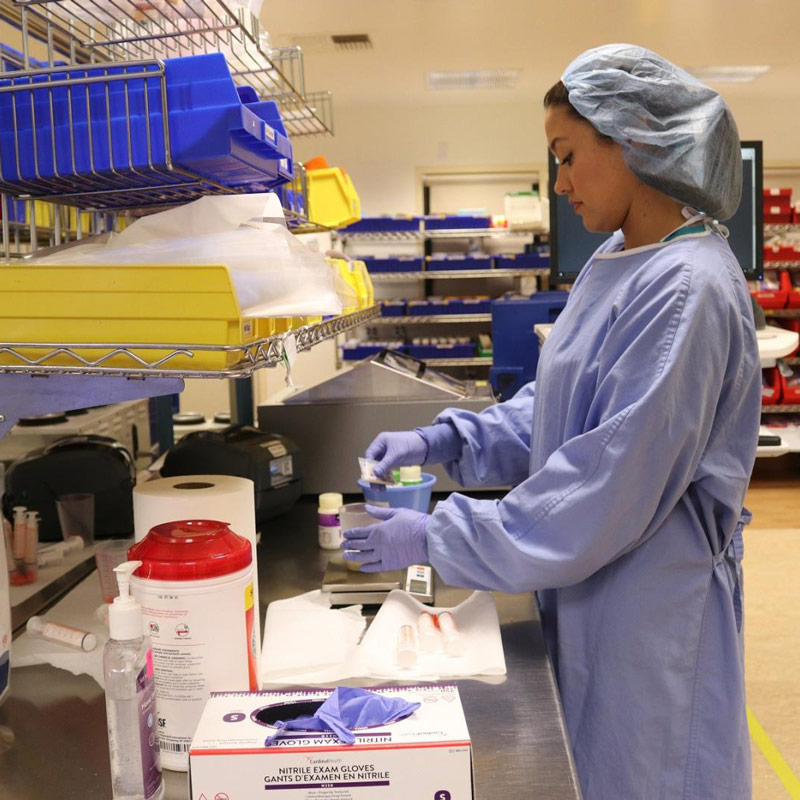
In addition to the lactation consultants, Miller Children’s & Women’s Hospital has a centralized area where breast milk is stored, called the Milk Lab. The Milk Lab is part of the Clinical Nutrition Program and is responsible for collecting, storing, preparing and delivering previously pumped breast milk for NICU patients. This is a helpful asset for moms to have a location just down the hall from their baby to store their pumped milk.
If a mother desires to provide breast milk to her premature infant, but is unable to, then pasteurized human donor milk may be provided for eligible NICU patients. Pasteurized human donor milk is milk that has been donated by mothers who have extra breast milk. This milk is thoroughly tested and undergoes a pasteurization process before it can be frozen and used at Miller Children’s & Women’s.
Human milk provides important nutritional and health benefits for premature babies. According to the American Academy of Pediatrics, a mother’s own milk is especially beneficial for very-low-birth-weight infants and is associated with a reduced risk of serious complications, including necrotizing enterocolitis and late-onset infections. It also contains nutrients, antibodies and growth factors that support healthy growth, development and easier digestion during a critical stage of a baby's development.
By having an on-site Milk Lab that offers human donor milk, Miller Children’s & Women’s is able to immediately provide breast milk to a baby in the NICU, if deemed appropriate by the neonatologist.
Miller Children’s & Women’s is dedicated to helping all moms achieve their infant feeding goals. Through specialized lactation care, families receive personalized guidance and resources to help meet their baby’s nutritional needs. With mothers and babies receiving coordinated care in the same hospital, families have access to lactation support and specialized care throughout their NICU journey.