Published on Nov. 24, 2026
What families should know about specialized care at Miller Children’s & Women’s Hospital during Prematurity Awareness Month — and what happens when a pregnancy takes an unexpected turn
When a pregnancy is considered high risk - because of a mother's health condition or age, a pregnancy with twins or more, or a concern found during prenatal care - where she plans to deliver matters.
That's often when families start looking for a hospital equipped with complex maternity and newborn care, such as Miller Children's & Women's Hospital, where specialists are in place before they're even needed, including for pregnancies considered healthy.
But even pregnancies that start as routine can take an unexpected turn. A mother may develop a serious complication. Labor may begin months early. Or a newborn may require intensive medical or surgical care immediately after birth.
In those moments, where a mother or baby receives care - and how quickly they can reach the right specialists - can make an important difference.
At Miller Children's & Women's Hospital, we work closely with community hospitals for those unexpected moments or unplanned emergent pregnancy needs. Miller Children's & Women's Hospital works with community hospitals throughout the region so that when a pregnancy, delivery or newborn's condition becomes more complex, families can be connected to a higher level of care.
Building a Regional Safety Net
Regional partnerships are an important part of maternity and newborn care because not every hospital is designed to treat the most complex conditions.
The American College of Obstetricians & Gynecologists (ACOG) supports regionalized systems in which hospitals collaborate so patients can remain in their communities when appropriate while having an established pathway to higher-level care when medically necessary. Research cited by ACOG found neonatal mortality among very-low-birth-weight infants was 38% when babies were born outside a Level III NICU hospital, compared with 23% when they were born at one.
That is why relationships between hospitals matter long before an emergency occurs. Miller Children's & Women's also has a dedicated transport team that works with community hospitals in both situations: bringing in mothers when a high-risk pregnancy or potential early labor is identified and bringing in newborns who need intensive care after birth.
Miller Children's & Women's provides advanced maternity care for high-risk pregnancies along with a Level IV Neonatal Intensive Care Unit (NICU), the highest level of neonatal care defined by the American Academy of Pediatrics. Level IV NICUs care for newborns with the most complex and critical conditions, maintain a broad range of pediatric medical and surgical specialists and facilitate regional transport.
“Having advanced maternity and neonatal care within the same hospital means that when a high-risk mother or baby needs emergent medical care, we are here for both of them,” said Vineet Shrivastava, M.D., medical director, maternal-fetal medicine, Miller Children's & Women's Hospital. “The transport relationship is there to help community hospitals connect their local patients with critical care quickly to ensure the healthiest and safest option possible.”
Bringing Specialized Care to Mothers and Babies
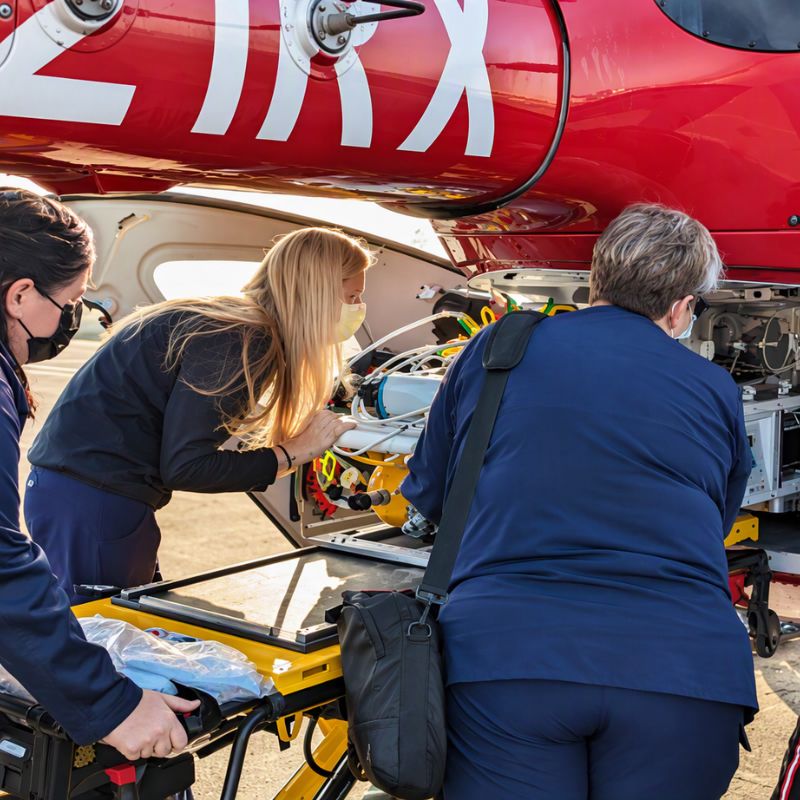
Miller Children's & Women's Transport Center is available 24/7 to respond when neighboring hospitals need a higher level of maternal, neonatal or pediatric care. Specially trained transport teams can travel by ground - and when necessary, air - to bring patients to Miller Children's & Women's while beginning advanced care during the journey. When a baby is born at another hospital and needs intensive care, the neonatal team travels to the baby.
Telehealth also allows Miller Children's & Women's neonatologists to consult with physicians at community hospitals, helping teams evaluate newborns, discuss treatment and determine whether transfer is appropriate.
“The strength of regional care is not one hospital working alone,” said Antoine Soliman, M.D., regional medical director, Miller Children's & Women's Neonatal Network. “It is hospitals knowing one another's capabilities, physicians communicating before an emergency occurs and transport pathways already being in place when a family needs them.”
For babies at risk for hypoxic-ischemic encephalopathy (HIE) caused by reduced oxygen and blood flow to the brain, the transport team can begin therapeutic hypothermia, or controlled cooling, which protects the baby's brain and improves the likelihood of better neurological outcomes. Because this treatment must begin within a limited window after birth, Miller Children's & Women's transport ambulances are equipped with this capability to save valuable treatment time.
Specialized Teams Under One Roof
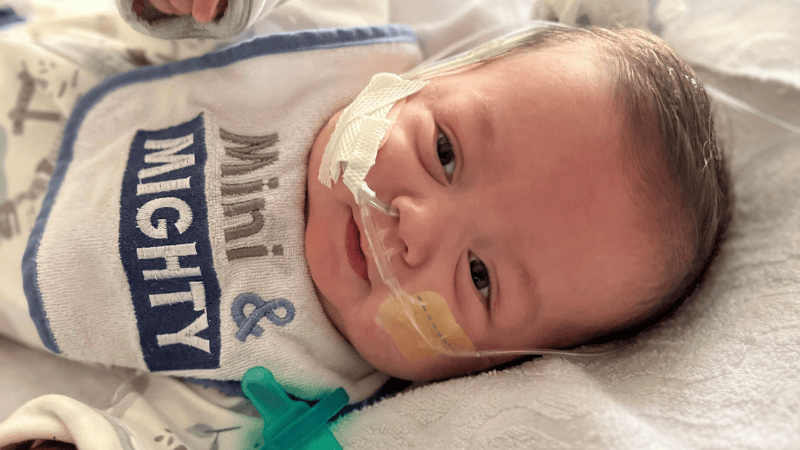
Miller Children's & Women's Hospital also is home to the region's most advanced care for babies born extremely premature. The Tiny Baby Program cares for micro-preemies born before 28 weeks or weighing just 1 pound. The unit is uniquely designed to provide care in a way that is neuro developmentally appropriate, with dimmed lighting and soft voices, creating a soothing atmosphere that mimics the mother's womb.
Miller Children's & Women's also brings together neonatologists, maternal-fetal medicine specialists and more than 30 pediatric subspecialties to address complex needs throughout pregnancy, birth and a child's hospitalization.
For mothers and babies, that collaboration helps create something invaluable: a connection to the right level of care when every moment matters.
Learn more about the High-Risk Pregnancy Program at Miller Children's & Women's Hospital by calling (562) 933-5437.
Medically Reviewed By
Antoine Soliman, M.D., regional medical director, Miller Children's & Women's Neonatal Network
Vineet Shrivastava, M.D., medical director, maternal-fetal medicine, Miller Children's & Women's Hospital
About the Experts
Antoine N. Soliman, M.D., is Regional Medical Director of the Neonatal Network at Miller Children’s & Women’s Hospital and is board certified in general pediatrics and neonatal-perinatal medicine. His clinical and research expertise focuses on improving care and outcomes for premature and extremely low birth weight infants, including safety and quality improvement, noninvasive ventilation and newborn infectious diseases.
Vineet K. Shrivastava, M.D., is a board-certified maternal-fetal medicine specialist and Vice Chair of the Department of Obstetrics & Gynecology at Miller Children’s & Women’s Hospital Long Beach. He specializes in caring for high-risk pregnancies, with expertise in placenta accreta spectrum, multiple gestations and hypertensive disorders of pregnancy.